Online ANSYS & FEA Training
Solve it by hand first, then validate it in ANSYS Workbench. Practical simulation and CAD training — SolidWorks, Creo and AutoCAD too — for students, engineers and working professionals.
ANSYS Workbench Foundation
Live classes start 19 Oct
Learn the complete ANSYS Workbench workflow — geometry, meshing, loads and supports, solving and reviewing results — hands-on, on real engineering parts.
- Live online classes
- Practice part files
- PDF notes
- Members-only resources
Featured Courses
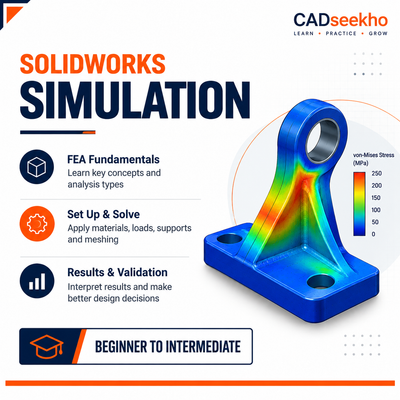
SOLIDWORKS Simulation — FEA & Engineering Analysis
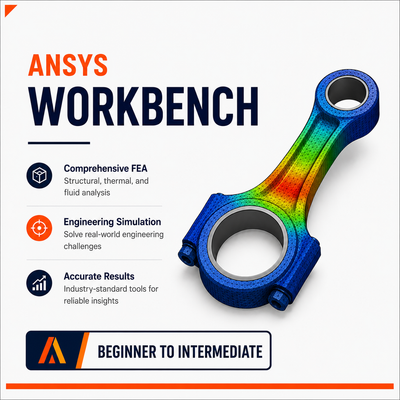
ANSYS Workbench Foundation
Simulation training focused on ANSYS Workbench fundamentals, project setup, meshing basics, and running your first structural simulations.
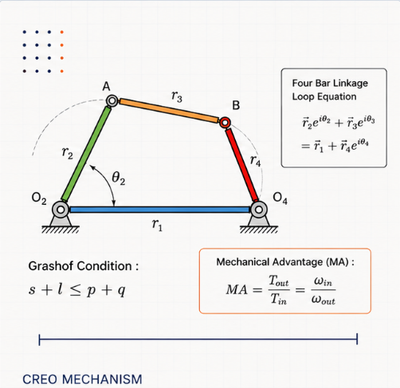
Creo Mechanism
Creo training focused on mechanism design, kinematic analysis, motion simulation, and practical mechanism workflows.
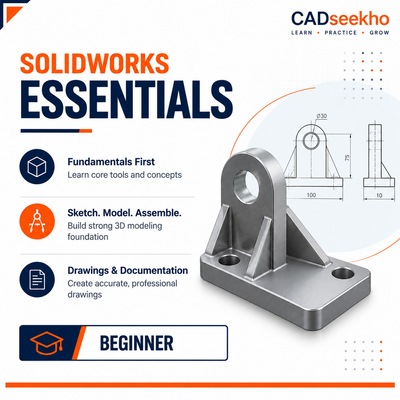
SolidWorks Essentials
Beginner-focused SolidWorks course covering fundamentals, sketching, part modeling, assemblies, drawings, and practical modeling workflows.
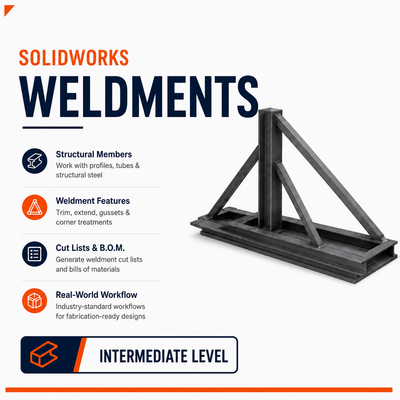
SolidWorks Weldments
SolidWorks training focused on structural members, weldment profiles, trim/extend, gussets, weldment cut lists, and fabrication-oriented design.
Live online ANSYS training — the hand-calc-first way
Instructor-led ANSYS Workbench classes you join from anywhere, for students and working engineers.
Most FEA courses teach you where to click. We teach you what answer to expect: you estimate stress or deflection with the right formula first, then build the model in ANSYS Workbench and compare. When the numbers agree you can defend the result in a design review; when they don't, you learn exactly why — mesh, supports or assumptions.
Why Learn With CADseekho?
Practical Learning
Focus on real engineering applications rather than only software commands.
Industry-Oriented Skills
Learn workflows and techniques useful in professional engineering environments.
Scenario-Based Problems
Include practical engineering problems and exercises.
Structured Learning
Courses are organized from fundamentals to advanced concepts.
Engineering Focus
Training is designed around real CAD, design, manufacturing, and simulation workflows.